
Patch Size Guide
Custom patch sizes start at 1 inch for simple designs and reach 12 inches for full jacket back patches. The dominant dimension is calculated as (Height + Width) ÷ 2. Standard placements: hats and caps 1.5 to 2.5 inches, left chest logos 2 to 3.5 inches, shirt sleeves 2 to 3 inches, and jacket backs 10 to 12 inches.
- Smallest practical patch: 1 inch (simple icon or single initial, no fine text)
- Most common order range: 2 to 5 inches (hats, chest logos, sleeves, and bags)
- Largest standard size: 10 to 12 inches (full jacket back, motorcycle cut)
- Measurement method: (Height + Width) ÷ 2 = dominant dimension
- Minimum for readable embroidered text: 0.25 inch letter height; smaller text requires woven or PVC
- Custom sizes: accepted on every order, no minimum quantity
Custom patch size is determined by three factors: placement location, design complexity, and patch material type. This guide covers standard dimensions by placement, the correct measurement method for custom and die-cut shapes, and how size requirements differ across embroidered, woven, PVC, and leather patches. New York businesses, uniform programs, and organizations use these dimensions to confirm specifications before artwork submission.
Standard Custom Patch Sizes
Standard size ranges by application are listed in the table below. All measurements refer to the dominant dimension of the design area. The border or merrow edge adds 0.125 to 0.25 inches to the overall patch footprint and is not counted in the dominant dimension figure.
| Placement | Typical Size | Notes |
|---|---|---|
| Hat / Cap (front panel) | 1.5 to 2.5 in | Structured caps: 2 to 2.5 in; unstructured: up to 3 in |
| Left chest logo (uniform / shirt) | 2 to 3.5 in | 2.5 in is the most common single uniform size |
| Shirt sleeve | 2 to 3 in | Measured along the sleeve axis |
| Name tape / badge strip | 1 to 2 in × 0.5 to 1 in | Rectangular; length is the dominant dimension |
| Backpack / bag (front panel) | 4 to 6 in | Velcro attachment typical on front pockets |
| Jacket front chest | 3 to 5 in | Outerwear and workwear standard |
| Jacket back (full) | 10 to 12 in | Motorcycle club, varsity letter, tactical |
| Beanie / knit cap | 2 to 3 in | Allow extra clearance for fabric stretch |
| Vest / tactical panel | 3 to 5 in | Measure the hook-and-loop panel before ordering |
| Dog vest / harness | 2 to 4 in | Velcro backing standard; confirm panel dimensions |
Patch Sizes for Hats and Caps
A standard structured snapback front panel measures approximately 2.75 to 3 inches tall. Patches in the 2 to 2.5 inch range fit the front panel without overhanging the seam or curving on the bill. Foam-front trucker hats accept patches up to 3 inches wide on the flat front surface. Unstructured dad hats and baseball caps have flexible panels; patches up to 3 inches apply flat at the crown. Beanies use 2 to 3 inch patches centered on a flat knit section away from the ribbed cuff.
Patch Sizes for Shirts and Uniforms
The left chest placement on a standard work shirt or polo accepts a 2 to 3.5 inch patch. The 2.5 inch size is the most common for corporate logo patches and uniform identification badges. Sleeve patches run 2 to 3 inches along the sleeve axis, positioned between the shoulder seam and elbow. Name tapes for uniform use measure 1 to 2 inches long and 0.5 to 1 inch tall, with letter height no less than 0.25 inch for legibility in embroidery. Polo shirts and button-down dress shirts use left chest logos at 2 to 3 inches.

Patch Sizes for Jackets and Outerwear
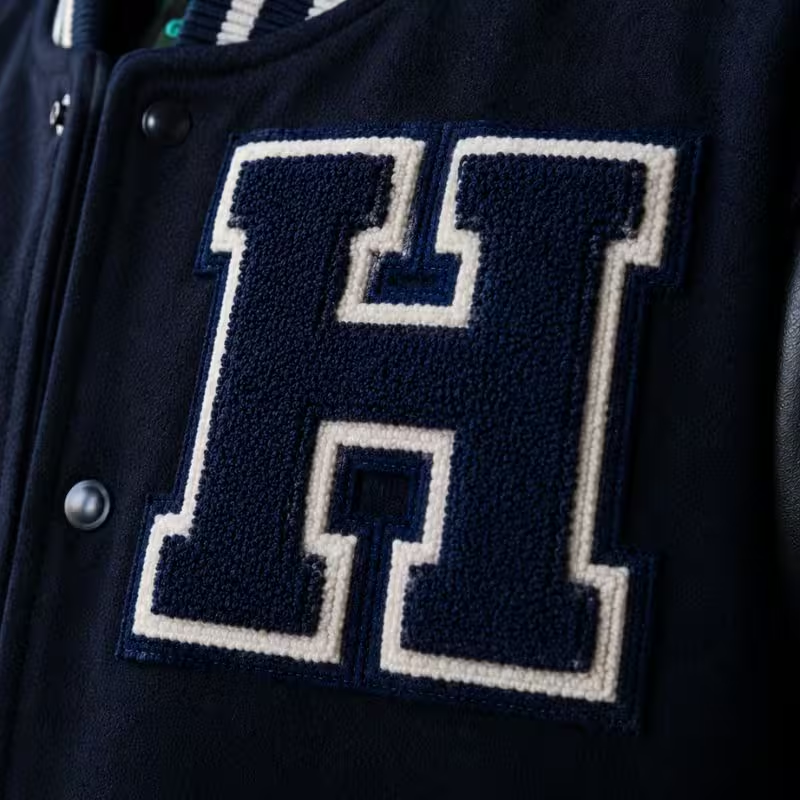
Front chest placements on jackets and varsity outerwear accept 3 to 5 inch patches. Full back patches for motorcycle club cuts, team jackets, and tactical vests run 10 to 12 inches as the dominant dimension. Center back patches at 8 to 10 inches work for school athletics and organizational jackets where full-panel coverage is not required. Shoulder sleeve patches on outerwear use 3 to 4 inches, consistent with law enforcement and fire service uniform standards.
Patch Sizes for Bags, Backpacks, and Gear
Backpack front panels typically measure 6 to 8 inches wide, making 4 to 6 inch patches the practical range for full-panel placement. Smaller 2 to 3 inch patches suit zipper pockets and side-panel accent placements. Tactical and military gear with dedicated velcro loop fields uses patches sized to match the loop panel dimensions, generally 3 to 5 inches. Dog harnesses with velcro loop panels use 2 to 4 inch patches; measure the loop field before ordering to ensure complete coverage.
How Patch Size Is Measured
The Dominant Dimension Formula
The dominant dimension is the standard measurement used across the patch industry. Measure the tallest height and the widest width of the design area, including all elements within the artwork boundary. Add both numbers and divide by two.
A design measuring 3 inches tall and 4 inches wide has a dominant dimension of (3 + 4) ÷ 2 = 3.5 inches. This single number represents the effective visual size and is the figure used when requesting a quote or specifying a production size.
Measuring Non-Rectangular and Die-Cut Patches
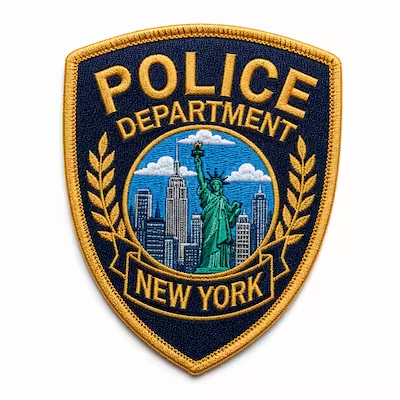
Die-cut patches with irregular outlines, such as shields, eagles, stars, or state silhouettes, are measured using the bounding box: the smallest rectangle that fully contains the design, including all protrusions and decorative elements. Measure the tallest point top to bottom and the widest point side to side. Apply the dominant dimension formula to these two measurements. The merrow or laser-cut border runs flush to the die edge and does not add to the bounding box figure.
How Size Varies by Patch Type
Patch material sets the minimum workable size and the level of fine detail the production process holds at scale.
Embroidered Patches
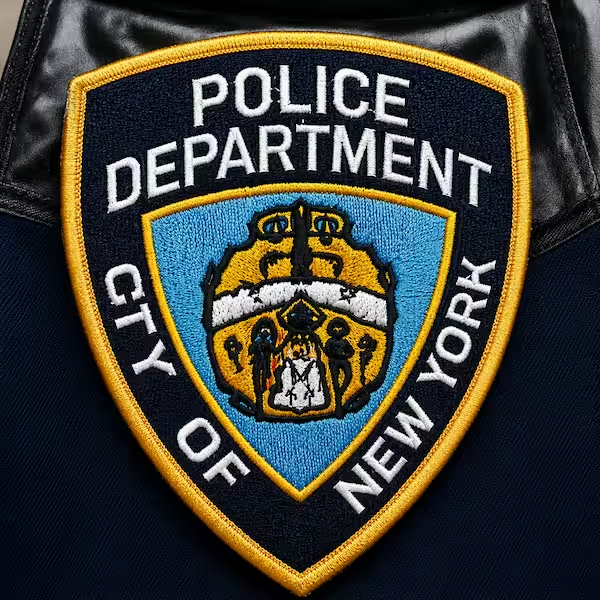
Embroidered patches are produced at sizes from 1.5 to 12 inches. At sizes below 2 inches, the design requires simplification: fine lines, small text, and tight gradients exceed the stitch density the thread holds at that scale. The practical minimum for legible text in an embroidered patch is a 0.25 inch letter height. Embroidered patches are the most versatile for large format sizes, as thread covers wide areas without adding material weight to the garment.
Woven Patches
Woven patches require a minimum of 2 inches for text and fine line detail to register accurately on the loom. The woven construction interlaces thread at higher density than embroidery, producing sharper small-scale output, but the minimum size for readable copy remains 2 inches. Woven patches are the preferred choice for small text, fine borders, and detailed logo reproductions in the 2 to 5 inch range where embroidery loses thread clarity.
PVC Patches
PVC patches reproduce sharp edges and fine detail at sizes from 1 inch. The rubber molding process holds crisp lines and raised relief elements that embroidery and woven construction do not achieve at small scales. PVC patches are produced from 1 to 10 inches and accept complex layered designs at sizes where embroidery loses definition. Raised 2D and 3D PVC formats add visual depth independent of the patch’s overall dimensions.
Leather Patches
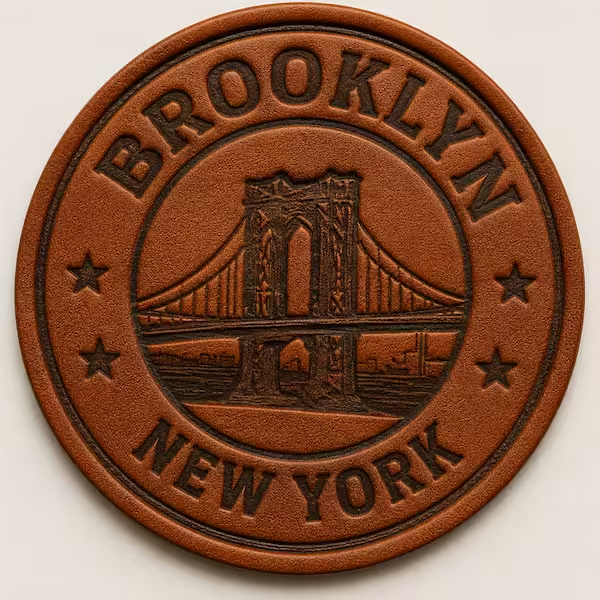
Leather patches perform best between 2 and 4 inches. The material holds embossed and laser-engraved detail cleanly within this range. Below 1.5 inches, leather edges curl or deform during heat application. Above 5 inches, material weight affects garment drape unless the patch is mounted on a rigid panel or secured with both iron-on adhesive and sew-on stitching along the border.
How Size Affects Design Detail and Price
Larger patches require more material, more thread for embroidered types, and more digitizing complexity. The cost relationship is proportional: a 4 inch embroidered patch uses greater thread coverage than a 2 inch patch of the same design, and pricing reflects that difference. At small sizes, design elements require reduction to stay within the technical limits of the production process. Simplifying artwork for a small patch is a production requirement, not a design compromise.
High-stitch-density designs at large sizes increase machine run time, as the embroidery head covers more area per pass. For woven patches, cost scales with loom setup and color count rather than strictly with size. For PVC patches, pricing reflects mold complexity and the number of relief layers rather than footprint dimensions alone.
The exact price at a specified size depends on patch type, design complexity, color count, and quantity. For sizing guidance specific to your design, request a free quote at (917) 735-9139. Quotes are returned within 1 hour.

Patch Size for NYC Uniforms and Industries
New York’s uniform and apparel industries follow established size conventions that align with the standard ranges above. Patches for police departments in New York and patches for firefighters in the NYC metro area follow conventions of 2.5 to 3 inches for left chest badge placement and 3 to 4 inches for shoulder sleeve insignia, consistent with national law enforcement and fire service uniform standards.
NYC school athletics use 3 to 4 inch chest patches for team identification and 8 to 10 inch back patches for varsity chenille lettering on team jackets. Fashion and branded apparel produced in and around the Garment District uses 1.5 to 3 inch woven patches for label positioning, brand marks, and seasonal collection identifiers. Broadway and theatrical costume departments order custom-shaped patches at 2 to 6 inches for period-accurate insignia and character wardrobe identification.
Custom Patches New York produces patches across all size ranges from our New York facility. Non-standard dimensions are accepted on every order, with no minimum quantity required.

Patch Size FAQ
What is the standard size for a custom patch?
What is the minimum patch size for readable text?
Does patch type affect which size I should order?
How do I measure the correct size for my patch?
Can I order a custom size not listed in the chart?
What size patch fits a structured snapback hat?
Ready to Order?
Ready to order? Send your design to our New York production team for a free quote, returned within 1 hour, or call (917) 735-9139. Manufactured in New York, shipped free nationwide, no minimum order.